Ride1Up vs Aventon: More Battery Per Dollar, or More Support?
Ride1Up or Aventon? Listed models run $1.66 to $3.48 per watt-hour of battery. See which brand sits where, plus claimed range, warranty and dealers.

ells online only.
- Pick Ride1Up if you want the most watt-hours for the money and can get repairs done without a dealer.
- Pick Aventon if you want a dealer nearby, or the 41 lb Soltera to carry.
Prices overlap in both sources, so price alone won’t decide it
eBike Revolt puts both brands in the $1,200 to $2,500 mid-range band. Its page, published January 2026, lists $1,195–$2,295 for Ride1Up and $1,199–$2,199 for Aventon. eBike Gear Lab, updated August 2026, gives Ride1Up $1,095–$2,295 and Aventon $999–$2,499. These are review-site figures, not brand price lists, so check each brand’s site for today’s price. Ride1Up was founded in 2018 and builds around 750W motors, per eBike Revolt.
Price isn’t where they differ. Both promise Class 3 performance and sell direct to the consumer.
Battery size: Ride1Up’s 614–960Wh beats Aventon’s 345–720Wh at both ends
eBike Gear Lab puts Ride1Up’s common batteries at 614–960Wh and Aventon’s at roughly 345–720Wh. At the top end, Ride1Up’s largest holds 240Wh more (960 − 720). At the bottom end, its smallest holds 269Wh more (614 − 345). This matters because, as Gear Lab puts it, “more watt-hours means more miles at the same assist level”. The e-bike batteries and claimed range section explains how to read these figures.
Ride1Up’s weak spot here is weight. eBike Revolt lists Ride1Up’s 614Wh Cafe Cruiser at 62 lb and Aventon’s 345Wh Soltera at 41 lb, a 21 lb gap. If you lift your bike onto a rack or carry it up stairs, the Soltera is the better pick.
Dollars per watt-hour: the Turbo leads, but per claimed mile the Soltera nearly ties it
Figures: eBike Revolt (January 2026), except the Vorsa row, from eBike Gear Lab (August 2026).
| Model | Listed price | Battery | Dollars per Wh | Claimed range | Per top claimed mile |
|---|---|---|---|---|---|
| Ride1Up Turbo | $1,595 | 960Wh | $1,595 / 960 = $1.66 | 60+ miles | $26.58 |
| Ride1Up Vorsa | $1,495–$1,695 | 720Wh | $1,495–$1,695 / 720 = $2.08–$2.35 | — | — |
| Aventon Aventure.2 | $1,799 | 720Wh | $1,799 / 720 = $2.50 | 60 miles | $29.98 |
| Ride1Up Cafe Cruiser (discontinued) | $1,595 | 614Wh | $1,595 / 614 = $2.60 | 30–50 miles | $31.90 |
| Aventon Soltera | $1,199 | 345Wh | $1,199 / 345 = $3.48 | 30–46 miles | $26.07 |
The Turbo’s “60+” is counted as 60. Turbo vs Soltera: $1,595 − $1,199 = $396 buys 960Wh − 345Wh = 615Wh more battery, so $396 / 615Wh = $0.64 per extra watt-hour, per eBike Revolt.
Of the four eBike Revolt models, the Cafe Cruiser (discontinued, per Ebike Escape) is the only Ride1Up that costs more per Wh than the Aventure.2: $2.60 against $2.50. The Turbo costs $204 less than the Aventure.2 and carries 240Wh more.
The catch is claimed miles. Per top claimed mile, the Soltera costs $26.07 and the Turbo $26.58, so the Turbo’s watt-hour lead narrows to roughly a tie. If your rides are shorter, the Soltera’s 46-mile claim costs about the same per mile for $396 less.
Claimed range: the Portola 02’s 15Ah battery has 50% more capacity but claims only 33% more top-end miles
Ride1Up’s Portola 02 page gives a claimed range of 25–45 miles with the 10Ah battery and 30–60 miles with the 15Ah battery. 15Ah is 50% more capacity than 10Ah. The claimed top end rises 33% (45 to 60 miles), and the bottom end rises 20% (25 to 30 miles).
What the claims leave out is where in the range you’ll land. Each claim spans 20 or 30 miles, and Gear Lab’s rule only holds at the same assist level. Ride1Up also lists this battery in amp-hours, not watt-hours, so it can’t go in the table above. Use watt-hours to compare across brands, and treat claimed range as each brand’s own figure.
Chargers, locks and spare batteries: the Portola 02 comes with a UL-compliant charger and two battery keys
From Ride1Up’s Portola 02 page, read October 2026:
- A “UL Compliant 48V two amp charger and cable” comes with the bike.
- The battery comes out of the bike and locks with a key. Two keys are included.
- Ride1Up describes a “quick swap of additional battery”, so you can carry a second pack and change it out.
- It folds to 19 x 29.5 x 36 inches (W x H x L).
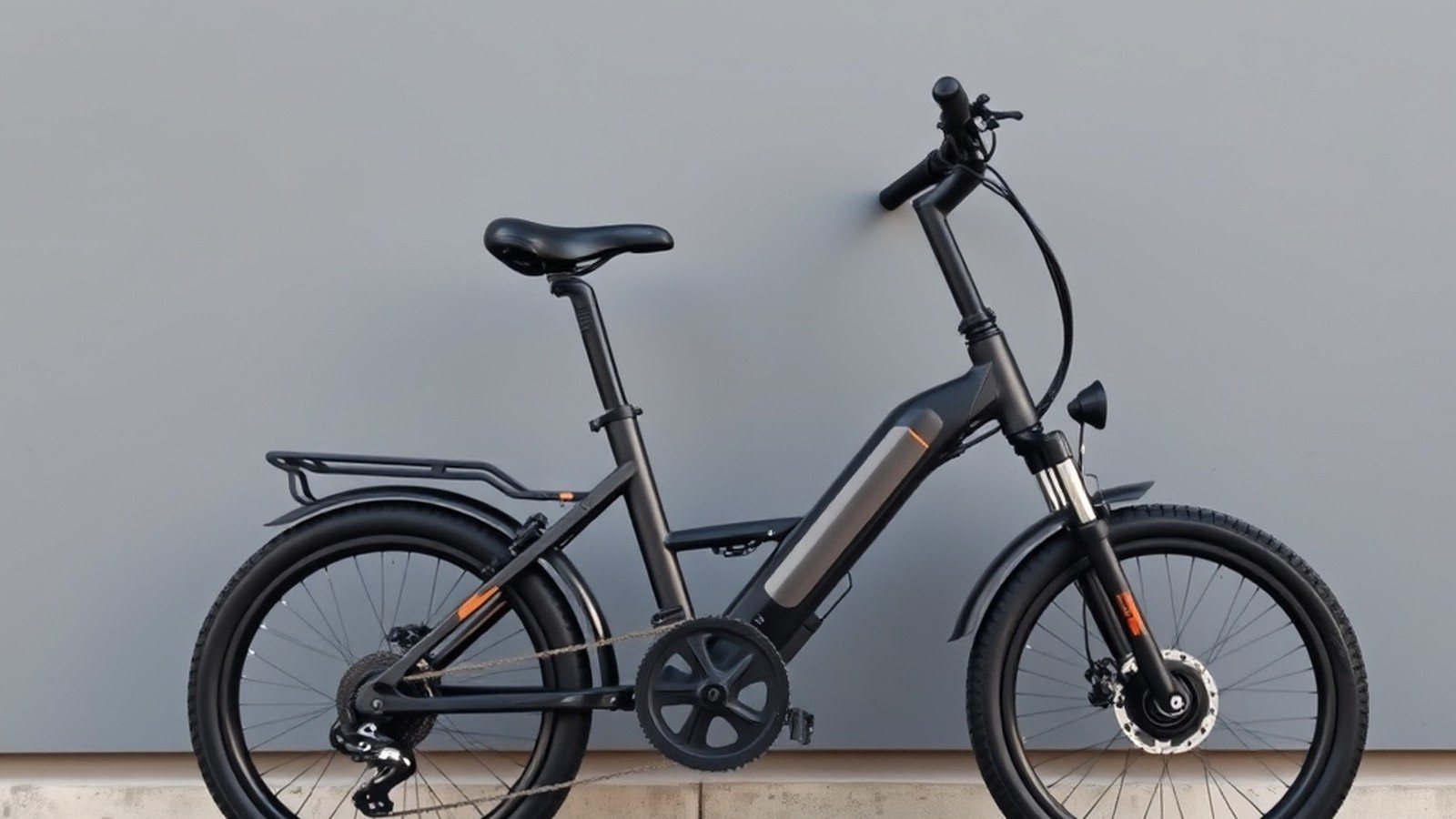
- It runs 20 x 3-inch tires, and Ride1Up lists the motor as “750w sustained”.
Aventon handles spares by sharing batteries across models. Ebike Escape says its ACU models use cross-compatible batteries; ACU stands for Aventon Control Unit. Before you buy a spare, ask Aventon to confirm it fits each bike you own.
On ACU bikes, GPS and security are free for the first year, then $20 a year. Ride1Up’s Portola 02 page lists iOS Find My tracking, and Ebike Escape says the Vorsa sets each assist level’s power from the display “without needing a separate app”. Whichever brand you choose, buy spare batteries and chargers from that brand.
Federal law defines a low-speed e-bike by pedals, motor power and motor-only speed
15 U.S.C. § 2085 defines a low-speed electric bicycle as one with working pedals, a motor under 750 watts, and a top speed under 20 mph on motor power alone, on flat pavement with a 170-pound rider. So a Class 3 bike’s 28 mph pedal-assist speed does not by itself settle which side of that line it falls on. The law puts these bikes under 16 CFR Part 1512 and supersedes stricter state requirements on them. That covers how the bike is built and sold. For where and how fast you may ride, check your state’s e-bike law.
Pick Ride1Up for battery per dollar, Aventon for a dealer nearby
On warranty, the sources disagree. eBike Gear Lab (August 2026) gives Aventon two years plus a lifetime frame warranty for the original owner if registered within 90 days, and Ride1Up one year on parts, not labor. eBike Revolt (March 2026) says both offer a 1-year warranty, with lifetime frame coverage on select Ride1Up models. Check each brand’s warranty page.
Ride1Up’s weak spots come after the sale: the shorter warranty in Gear Lab’s account, and no dealer to visit. Its Portola 02 page lists 30-day returns and free shipping (both asterisked) and a pre-sale phone line, 1-877-RIDE1UP. But the Turbo is the cheapest per Wh in the table. Buy Ride1Up if you want the most battery for your money and can get repairs done without a dealer.
Aventon’s weak spots are in the battery. Its largest common pack is 720Wh, and the Soltera costs the most per Wh in the table. ACU tracking costs $20 a year after the first year. But Aventon has 1,700+ U.S. dealers. Buy Aventon if you want a shop behind your bike, or a 41 lb Soltera you can lift.
If you want a big battery and a dealer, the Aventure.2 sits in between: 720Wh at $2.50 per Wh, with Aventon’s dealers behind it.
How we evaluated
We compared listed price, battery size, cost per watt-hour and per claimed mile, and what you get after the sale: warranty, dealers, returns, spares and subscriptions. Sources:
- Model prices, weights, claimed ranges and one warranty view: eBike Revolt (January and March 2026)
- Price and battery ranges, warranty, dealers and the Vorsa: eBike Gear Lab (August 2026)
- ACU, Vorsa and discontinued-model details: Ebike Escape
- Portola 02 specs, returns and support: Ride1Up’s own page
- Federal definition: the U.S. Code
Each cost figure is the listed price divided by battery size or by the top claimed mile, rounded to the cent. Pages were read October 2026.
FAQ
Which brand gives more battery per dollar? Ride1Up, on the listed models: the Turbo is cheapest per Wh. Per top claimed mile, Aventon’s Soltera nearly ties it, per eBike Revolt’s figures.
Does a bigger battery mean more claimed range? At the same assist level, more watt-hours means more miles, per eBike Gear Lab. Ride1Up’s Portola 02 claims 25–45 miles on the 10Ah battery and 30–60 miles on the 15Ah.
Does the federal e-bike law override my state’s rules? Only for product rules. 15 U.S.C. § 2085 supersedes stricter state requirements on how low-speed e-bikes are built and sold. Its definition only covers bikes under 750 watts that top out under 20 mph on motor power alone.
Sources
- https://ebikerevolt.com/blog/ride1up-vs-aventon-ebike-brand-comparison
- https://ebikegearlab.com/compare/ride1up-vs-aventon/
- https://ebikerevolt.com/blog/aventon-vs-ride1up-ebike-comparison
- https://ride1up.com/product/portola-02/
- https://ebikeescape.com/ride1up-vs-aventon/
- https://www.law.cornell.edu/uscode/text/15/2085
- https://www.ecfr.gov/current/title-16/chapter-II/subchapter-B/part-1512